Choosing the Right Platform: Which Social Media Channels Fit Your Business Best
October 15, 2025
Tags : social media, Business, platform
Choosing the Right Platform: Which Social Media Channels Fit Your Business Best
In today’s business landscape, social media isn’t optional—it’s essential. But that doesn’t mean every business needs to be active on every platform. Each network attracts a unique audience, favors certain content styles, and offers distinct opportunities for growth. Knowing where to focus your time and energy can mean the difference between consistent momentum and wasted effort.
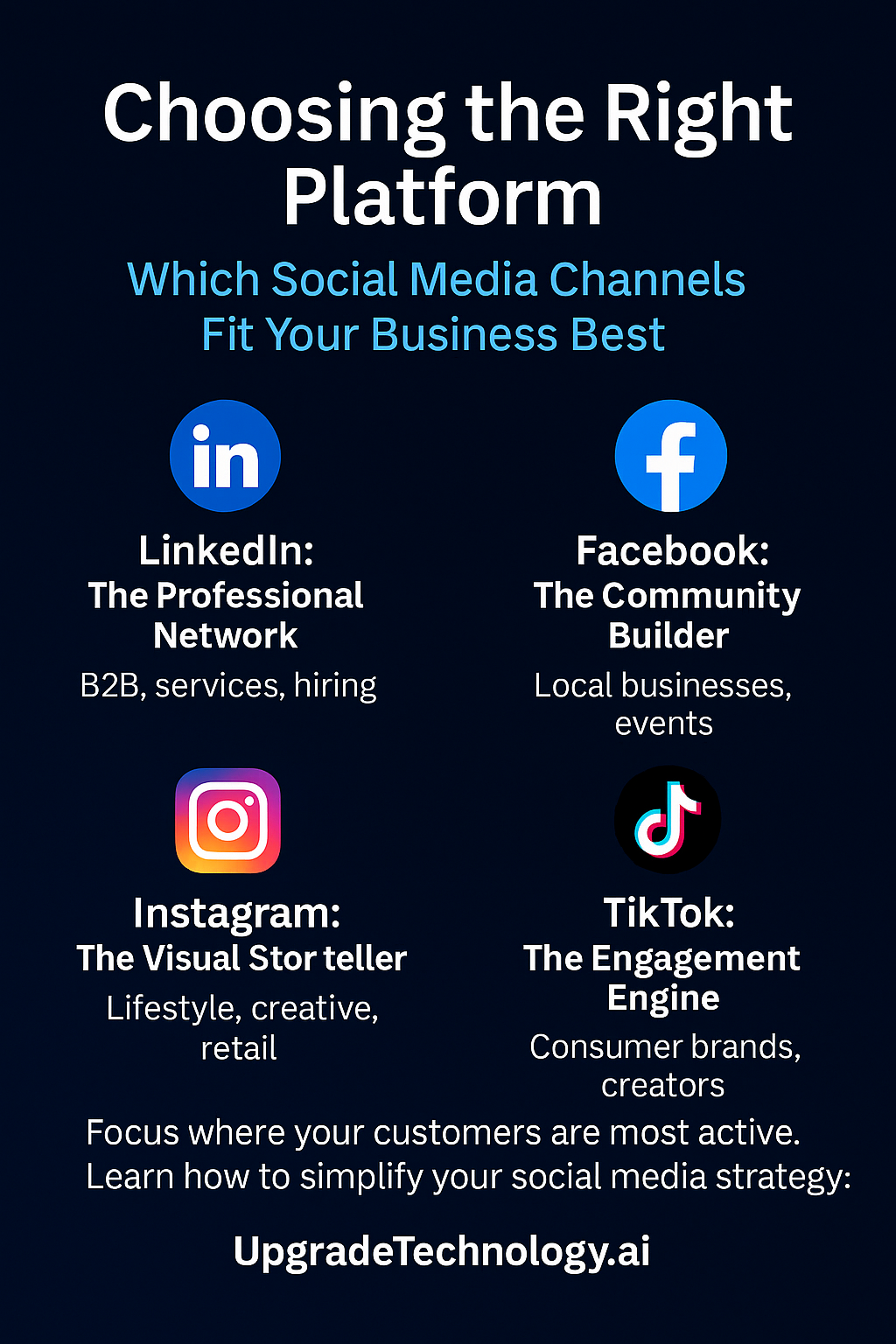
The key is alignment: choosing platforms that match your audience, brand voice, and business goals. Below is a practical breakdown of how LinkedIn, Facebook, Instagram, and TikTok differ—and how each can serve your specific strategy.
LinkedIn: The Professional Network
LinkedIn is the go-to space for professionals, industry experts, and decision-makers. If your business sells to other businesses (B2B), offers consulting or professional services, or depends on credibility and relationships, LinkedIn should be a top priority.
It’s a platform built around knowledge-sharing and authority-building. Unlike consumer-oriented social apps, LinkedIn rewards content that informs and inspires rather than entertains. Articles, short insights, and expert commentary perform well, especially when they highlight real-world experience or lessons learned. It’s also an ideal hub for recruiting, business development, and partnerships.
Best for:
- Business-to-business (B2B) companies
- Consultants, coaches, and advisors
- Software and technology firms
- Financial, legal, and professional services
Why it works:
LinkedIn encourages authenticity and expertise. Its algorithm favors thoughtful contributions over quick engagement bait, making it perfect for demonstrating credibility and cultivating relationships that convert into high-value opportunities.
What to post:
- Industry insights and professional commentary
- Case studies and success stories
- Career opportunities
- Product or service updates with a focus on value
Facebook: The Community Builder
Despite the rise of newer platforms, Facebook remains one of the strongest tools for local and community-driven businesses. Its user base skews slightly older, with deep engagement from adults aged 30 to 65 and beyond. That audience makes it a powerful channel for businesses that depend on word-of-mouth, reviews, and personal connections.
Facebook’s greatest strength lies in its ability to build relationships. Features like Groups, Messenger, and Business Pages foster ongoing dialogue between brands and their communities. It’s ideal for showcasing your business in a more conversational, approachable way while still driving real results through events, ads, and local promotions.
Best for:
- Local service businesses (contractors, salons, fitness studios, restaurants)
- Nonprofits and community organizations
- Family-oriented or neighborhood-based companies
- Event-driven or membership-based businesses
Why it works:
Facebook blends storytelling and engagement. Reviews, community discussions, and direct messaging make it easy to build trust and loyalty. For many small businesses, it doubles as both a storefront and customer service portal.
What to post:
- Promotions, events, and local updates
- Customer testimonials
- Behind-the-scenes or team content
- Polls and community questions
Instagram: The Visual Storyteller
Instagram is the heart of modern visual branding. It’s where aesthetics, creativity, and personality come together to shape how people perceive your business. For brands that rely on visuals—whether it’s the beauty of a product, the energy of an experience, or the design of a space—Instagram is often the most influential channel for discovery and engagement.
Unlike LinkedIn, which values expertise, Instagram thrives on emotion. It’s about showing, not telling. Reels, carousels, and Stories give you space to showcase your brand personality and tell your story in ways that feel authentic and aspirational.
Best for:
- Lifestyle brands
- Restaurants and hospitality
- Beauty, fitness, and fashion
- Real estate, interior design, and creative services
Why it works:
Instagram users respond to visuals that inspire or entertain. It’s where potential customers imagine themselves using your product, visiting your space, or joining your community. The more genuine and visually consistent your content, the stronger your brand connection becomes.
What to post:
- High-quality images or short videos
- Customer highlights and product demos
- Visual storytelling that reflects your brand identity
- Seasonal or trend-based content
TikTok: The Engagement Engine
Once considered a platform for teenagers, TikTok has quickly become one of the most powerful discovery engines on the internet. Its algorithm is remarkably effective at connecting engaging content with the right audience—regardless of follower count. That makes it ideal for small brands and solopreneurs looking to gain visibility fast without a large ad budget.
TikTok rewards creativity, authenticity, and storytelling. Businesses that embrace its informal, human style can reach thousands—or even millions—of potential customers through consistent posting and participation in relevant trends.
Best for:
- Consumer-facing brands (especially lifestyle, food, and retail)
- Personal brands and creators
- Educational or how-to content
- Businesses targeting younger demographics (ages 16–35)
Why it works:
TikTok’s reach potential is unmatched. Even small accounts can go viral with a single, well-crafted video. The platform favors authenticity over polish, giving businesses an opportunity to show personality, transparency, and humor.
What to post:
- Quick tips, tutorials, or “how it’s done” videos
- Behind-the-scenes moments and authentic reactions
- Product showcases or creative challenges
- Light humor and participation in trending sounds or topics
Cross-Platform Strategy: Quality Over Quantity
Trying to master every platform spreads most small businesses too thin. It’s far more effective to focus on one or two channels where your audience already spends time and show up there consistently.
Each network has its own personality. LinkedIn is professional. Facebook is relational. Instagram is visual. TikTok is experiential. Instead of copying the same post across platforms, adapt your message and format to fit each environment. For example, a behind-the-scenes photo might become a short Reel on Instagram, a story of leadership on LinkedIn, and a community update on Facebook.
The goal isn’t to be everywhere—it’s to be effective where it matters most. Consistency, relevance, and brand voice always outweigh volume.
Final Thoughts
Social media can do far more than generate followers; it builds visibility, trust, and long-term relationships with your audience. The key is choosing the right platform for your business goals, your audience, and your authentic voice. Start with the network where your ideal customer is most active, then commit to showing up consistently and delivering value with every post.
Once you’ve built a rhythm, automation tools can help you maintain that presence efficiently—but strategy should always come first. If you’d like to learn how to simplify your social media workflow while staying active on the right platforms, explore our Social Media Automation solutions for businesses of all sizes.
👉 Learn More About Social Media Management